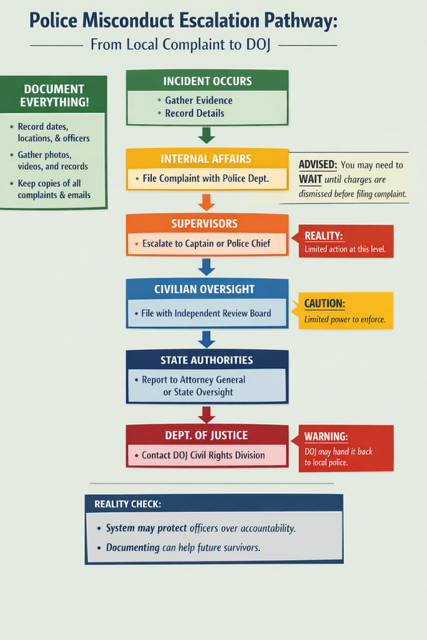
Experiencing police misconduct can be terrifying, confusing, and isolating. Whether it’s false arrest, rights violations, or abuse of authority, survivors often don’t know where to turn or what steps to take. This guide walks you through the escalation process — from local police complaints to the Department of Justice — while also explaining the limitations of the system.
1. Document Everything
Before you make a complaint:
- Record dates, times, and locations of incidents.
- Keep photographs, videos, and recordings (if legally allowed in your jurisdiction).
- Preserve documents, emails, and medical records related to injuries or violations.
- Note the names, badge numbers, or identifying details of officers involved.
The more detailed your documentation, the stronger your case. Even small details matter.
2. Start With the Departmental Complaint Process
- Internal Affairs / Professional Standards Unit
- File a complaint with the police department’s Internal Affairs or Professional Standards Unit.
- This is the standard first step for reporting misconduct.
- Tip: Submit the complaint in writing and keep a copy. Ask for a tracking number or case reference.
This first step establishes your official record of the complaint and starts the escalation chain.
3. Timing Considerations for Survivors with Pending Charges
Some survivors are advised to wait until their criminal charges are resolved or dismissed before filing complaints against police.
- Why: Filing a complaint too early can sometimes be used against you or complicate your case.
- Reality check: Waiting does not guarantee action — in many cases, complaints are ignored or mishandled, even after charges are resolved.
- Recommendation: Document and prepare your complaint in advance, but prioritize your legal safety first.
Every situation is different. Consult an attorney or advocacy group if you’re unsure whether to file immediately.
4. Escalate to Supervisors
If Internal Affairs doesn’t act or dismisses your complaint:
- Contact the police captain or chief directly.
- Request a formal review or hearing of your complaint.
- Document all communications and responses.
Sometimes, issues remain unresolved at this level — especially if the misconduct involves high-ranking officers.
5. Police Oversight or Misconduct Boards
Many states have independent police oversight agencies or boards that review complaints against officers.
- Examples: Police Misconduct Review Board, Civilian Review Boards, or Ombuds Offices.
- Submit all documentation, along with any departmental complaint reference numbers.
- Ask about timelines and procedures, and request updates in writing.
These boards are meant to provide impartial oversight, but they vary widely in authority and effectiveness.
6. Escalate to State or Federal Authorities
- State Attorney General or State Police Oversight: If local boards fail, the state can review cases and sometimes investigate officers directly.
- Department of Justice (DOJ) – Civil Rights Division: Handles cases of civil rights violations, including abuse of authority, false arrest, or rights violations.
Important disclaimer:
Even at the DOJ level, investigations may be returned to the same department or officers involved, particularly in cases of administrative mismanagement. This can create a conflict of interest. Survivors must be aware that systemic protection of officers sometimes outweighs accountability, even when violations are clear.
7. Protect Yourself Throughout the Process
- Keep copies of all complaints, emails, and forms.
- Avoid assuming that escalation guarantees action; your goal is to document and establish an official record.
- Consider legal counsel or advocacy organizations for guidance and emotional support.
Documentation, persistence, and awareness of systemic limitations are your primary tools.
8. Tips for Survivors
- Be methodical: Keep everything organized and timestamped.
- Stay calm and factual: Emotional statements are valid but don’t replace concrete documentation.
- Set boundaries: Interactions with the same officers involved in misconduct can be retraumatizing.
- Know your limits: The system is imperfect. Sometimes accountability may not come, and your safety and peace take priority.
Final Thoughts
Reporting police misconduct is difficult, slow, and sometimes discouraging. The system can fail, and survivors may be advised to wait until criminal charges are resolved before filing complaints. Even so, creating a complete record of events and following the escalation chain ensures that your experience is documented, validated, and preserved.
Even if full justice is not achieved, your advocacy helps future survivors and creates a trail of accountability that can prevent or expose misconduct later.
Create Your Own Website With Webador